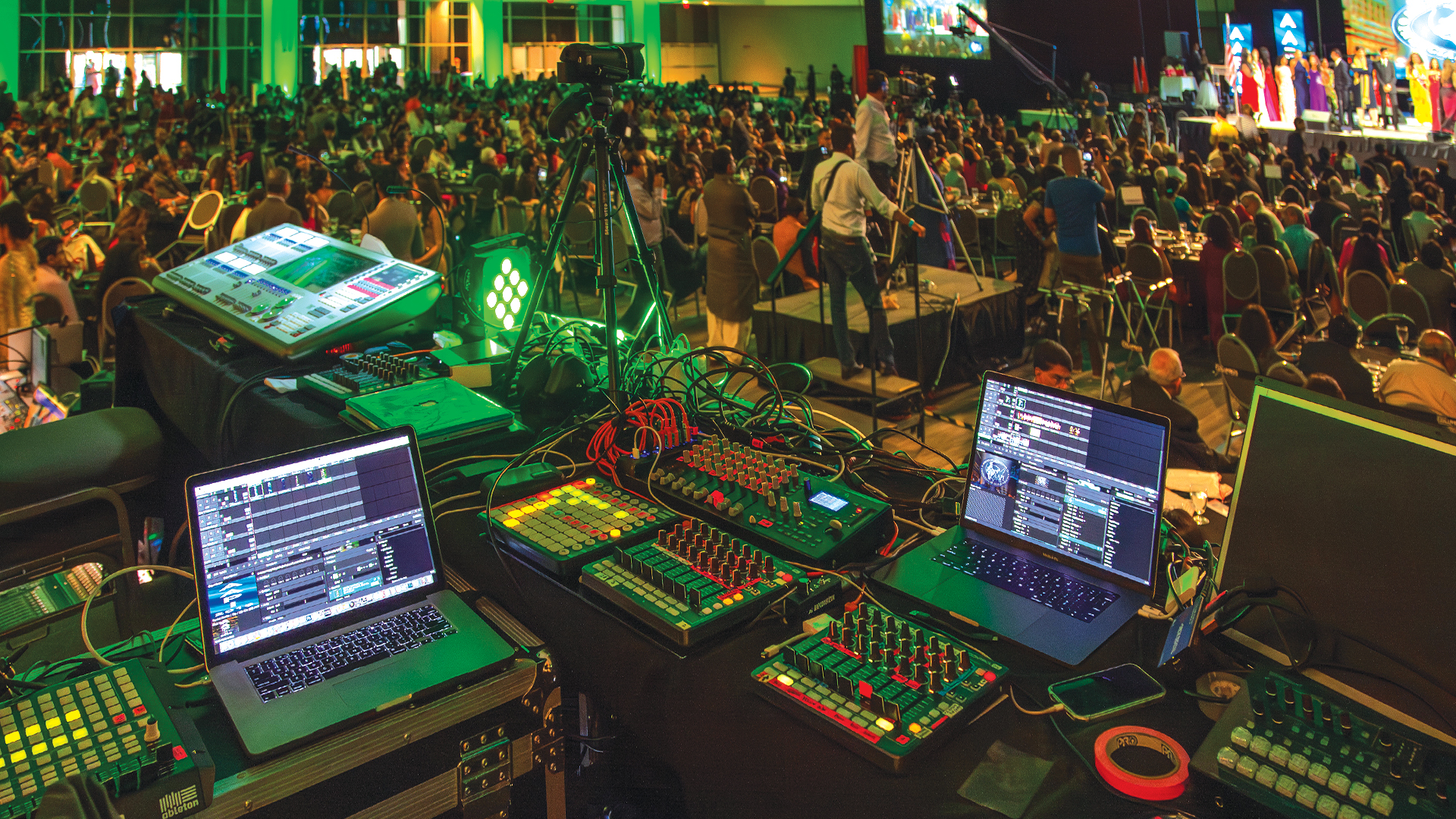
In the control room of a major multi-stage festival or arena tour, one name dominates the conversation above all others: MA Lighting. Specifically, the grandMA3 console platform has become the de facto command and control infrastructure for productions deploying 3,000 or more intelligent fixtures across simultaneous stages. Understanding why grandMA3 holds this position — and how experienced programmers exploit its full capability — reveals the true depth of modern lighting control technology
The History That Built the Brand
MA Lighting International GmbH was founded in Germany in 1983, initially producing analogue dimmer control systems for German theatre. The pivot to digital came with the first grandMA console in 1999 — a product that immediately distinguished itself through its network-native architecture at a time when most competitors were still treating networking as an afterthought. The grandMA2 released in 2010 became arguably the most influential professional lighting console in history, its position on riders becoming so dominant that entire generations of LD assistants and programmers built careers around it exclusively.
The grandMA3 system, launched commercially around 2018–2019, represented a complete architectural rebuild rather than an incremental update. Moving to a 64-bit processing engine, object-oriented show file structure, and native GDTF (General Device Type Format) support, grandMA3 addressed the scalability demands of productions that older platforms struggled to serve. The transition was not painless — grandMA2 and grandMA3 show files are incompatible, causing significant industry friction — but the consensus has settled firmly in grandMA3’s favour for new productions.
What 3,000+ Fixtures Actually Demands from a Control System
A production deploying 3,000 or more intelligent fixtures is not simply a larger version of a 300-fixture show. The parameter count alone — modern fixtures like the Robe BMFL Blade, GLP JDC1, or Claypaky Mythos 2 each carry 50–100+ DMX parameters — creates a universe management challenge that requires dedicated infrastructure thinking. grandMA3’s handling of this complexity involves MA-Net3, its proprietary network protocol running over standard gigabit Ethernet, capable of distributing data to hundreds of MA xNode, MA NPU, and MA VPU processing nodes across a production.
The physical universe count tells only part of the story. A 3,000-fixture show might span 180–200 DMX universes, managed through Art-Net 4 or sACN distribution into node hardware. grandMA3’s internal architecture handles this through a distributed processing model: the console surface manages operator interaction while dedicated MA Processing Unit (MA NPU) hardware handles the raw universe output computation. A full grandMA3 system with multiple NPUs can output 250,000+ DMX parameters at full 44 Hz refresh rates — a computational challenge that would overwhelm any single-CPU architecture.
Multi-Stage Coordination: Networking Multiple Consoles
Multi-stage festival productions introduce a further layer of complexity: multiple lighting operators working simultaneously on different stages, often with shared fixture pools, shared network infrastructure, and shared timecode sync references. grandMA3’s session networking allows multiple consoles to operate within a shared show session, with carefully managed permission structures determining which operator has command authority over which fixture groups. This architecture enables a master operator at FOH to maintain show-level coherence while stage-specific operators handle real-time looks for their respective performances.
Timecode integration in grandMA3 via MIDI Timecode (MTC), SMPTE LTC, or Art-Net Timecode enables full show automation on pre-programmed productions — essential for broadcast events where lighting must synchronise frame-accurately with camera cuts and musical playback. Productions using grandMA3’s timecode executor system alongside Ableton Link for musical synchronisation achieve levels of programming precision that would have been technically unattainable a decade earlier.
The Programmer’s Toolkit: MAgic, Phaser Engine, and Preset Architecture
grandMA3’s programming philosophy diverges significantly from earlier console generations in its reliance on the Phaser Engine — a dynamic effect system that generates movement, colour, and intensity effects mathematically rather than through pre-stored sequences. An experienced grandMA3 programmer can generate complex, musicality-responsive looks across 3,000 fixtures in seconds using phaser presets, dramatically reducing pre-production programming time while increasing real-time flexibility. This represents a philosophical shift from the cue-and-playback model that dominated lighting control for decades.
The MAgic visualiser integration — allowing real-time show previewing within the console interface — has transformed the pre-production programming workflow. Combined with GDTF fixture profiles that accurately represent real-world fixture behaviour including beam geometry and colour rendering, programmers can build and refine entire shows before physical setup, arriving on site with confidence that their programming will translate accurately to the real rig.
Practical Touring Realities: Backup Systems and Redundancy
Productions trusting 3,000 fixtures to a single console fail point are not running professionally. grandMA3’s session networking enables hot backup console configurations where a secondary console mirrors the primary show state in real time, capable of assuming control within seconds of any primary failure. This redundancy architecture — typically a full-size MA Lighting grandMA3 full-size as primary with a grandMA3 compact XT as hot backup — adds $50,000–$100,000 in rental cost to a production but is considered non-negotiable for broadcast events and major touring productions where show cancellations carry seven-figure financial consequences.
The grandMA3 ecosystem has also absorbed the onPC software platform into professional workflows, with touring productions using grandMA3 onPC command wing solutions as tertiary backup positions. The consistency of the grandMA3 software interface across hardware tiers — from the full-size console to onPC — means that operators trained on one platform are immediately productive on any other, a practical advantage that compound across the 250+ operators who may interact with a given show file across a year-long run.
The Future: IP Lighting Integration and 4D Visualisation
As IP-connected intelligent fixtures begin entering touring production — with manufacturers like Robe, Chauvet Professional, and ARRI developing network-native devices — grandMA3’s Ethernet-native architecture positions it well for the next generation of lighting control infrastructure. The integration of 4D visualisation tools like WYSIWYG by Cast Software and Capture Visualizer into grandMA3-centred pre-production workflows continues to compress the gap between virtual programming and physical deployment. For productions coordinating 3,000+ fixtures across multiple simultaneous stages, the grandMA3 platform remains the most proven solution in the industry.
