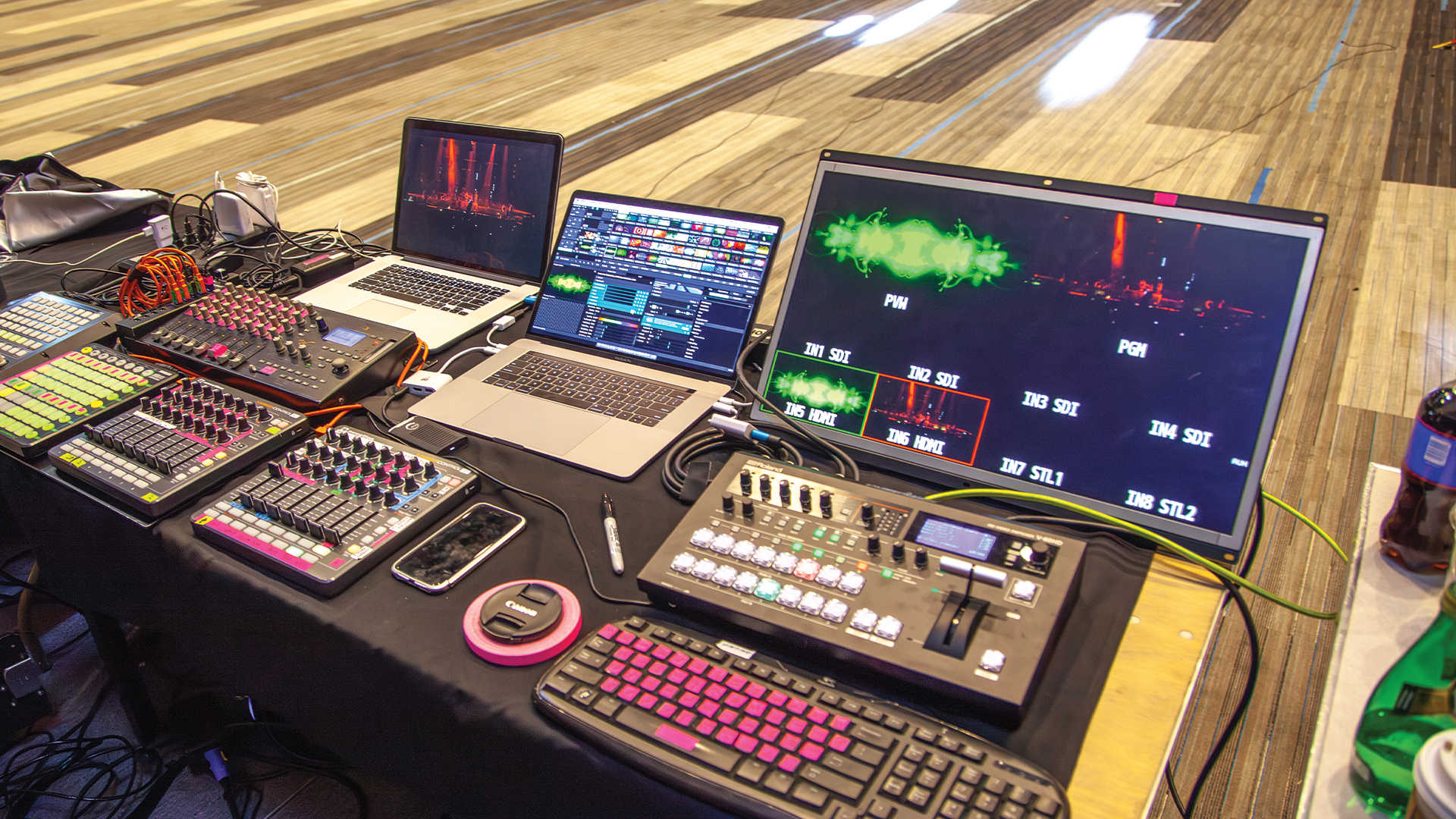
The intersection of corporate event production and broadcast-quality live lighting has never been more complex, or more technically demanding, than it is today. Hybrid events — simultaneous live and virtual experiences connecting in-person attendees with global remote audiences through streaming platforms — require lighting systems that serve two fundamentally different viewing experiences simultaneously. Behind the best of these productions, the MA Lighting grandMA3 console platform appears with remarkable consistency. Understanding why illuminates the particular demands of hybrid corporate production at scale.
The Hybrid Event Challenge: Two Audiences, One Lighting System
A hybrid corporate event for a global enterprise might seat 2,000 delegates in a convention centre while simultaneously streaming to 50,000 viewers across 140 countries. The in-room attendee experiences lighting directionally and spatially — they see fixtures, observe beam geometry, feel the atmosphere created by the lighting design. The remote viewer experiences lighting purely through the camera: as contrast, colour balance, skin tone rendering, and background atmosphere in a two-dimensional image frame. These are profoundly different perceptual experiences, and satisfying both simultaneously requires sophisticated console programming and operator skill.
The grandMA3’s executor architecture — where independently programmable playback executors can be configured to manage different aspects of the production simultaneously — is particularly well-suited to this challenge. A typical hybrid show file might assign separate executor pages to broadcast-optimised key lighting (maintaining consistent colour temperature and intensity levels for cameras), audience atmosphere (dynamic and responsive to energy in the room), presenter follow spotting (managed by dedicated follow spot operators or automated tracking systems), and speaker transition sequences (automated cue stacks that fire on timecode or manual triggers as the programme agenda advances)
Scale and Complexity: What 250+ Events Per Year Looks Like
The companies deploying grandMA3 consoles across 250+ hybrid corporate events per year are the specialist corporate AV integrators and production companies whose business models are built around premium event delivery: companies like Freeman, George P. Johnson, Czarnowski, Blitz), and the technical production divisions of global event agencies. These organisations maintain grandMA3 hardware inventories — full-size consoles, compact XTs, and NPU processing units — alongside the trained operators who can program and operate them across the full spectrum of corporate event formats.
The fixture universe in corporate events has expanded dramatically as wireless LED technology — particularly from Astera — has entered mainstream deployment. A product launch event using 400+ Astera wireless fixtures alongside traditional cable-powered intelligent moving heads and LED strips represents a DMX universe count that previous console generations managed only with difficulty. grandMA3’s ability to handle 250+ universes natively, with the processing muscle of networked NPU units absorbing the computational load, makes it the practical choice for events where fixture counts and universe requirements continue escalating.
Timecode and Automation in Hybrid Corporate Shows
The most sophisticated hybrid corporate events are fully scripted productions where lighting, audio playback, LED wall content, and live camera switching are synchronised through a shared timecode spine. grandMA3’s timecode executor system, receiving SMPTE LTC from a Denon DN-500A or Evertz NATM Master Clock and distributing it across the production network, enables lighting automation sequences to fire with broadcast-grade timing precision. Automated LED wash state changes, moving head position sequences, and strobe effects that must land on specific musical beats or video cue points are programmed as timecoded cue stacks that execute identically in rehearsal and on the live event day — eliminating the variable of human reaction time from the most demanding cue sequences.
The remote operation capabilities of grandMA3 — specifically the grandMA3 onPC software running on networked laptop computers — have also transformed hybrid production workflows. A remote operator working from a backstage position can manage follow spot cues via remote tablet interface while the primary operator at FOH handles overall show execution. A remote programming station allows a programmer to refine show file content between sessions on a multi-day event without occupying the primary console position. These distributed operator capabilities, enabled by the grandMA3’s session networking architecture, represent a meaningful operational efficiency for large hybrid event productions.
The Operator Ecosystem: Training and Certification
One reason grandMA3 dominates corporate event lighting is the depth of the operator talent pool trained on the platform. MA Lighting’s certification programme) — offering Operator, Programmer, and Senior Programmer certification levels — has produced thousands of qualified operators globally who are deployable by production companies with confidence in their console competency. For corporate clients with global event programmes requiring consistent delivery across multiple continents, the availability of certified MA operators in every major market is a practical production planning advantage that reinforces the platform’s commercial position.
Training programmes offered by authorised MA distributors and third-party training organisations — including MA Lighting University), Vectorworks University), and numerous independent providers — ensure a continuous pipeline of new operators entering the market with grandMA3 skills. The breadth of free educational resources, including MA’s own YouTube channel and the grandMA3 Help System embedded in every console, lowers the barrier to entry for self-directed learning.
The Business Case: Why grandMA3 Wins Corporate Contracts
Beyond technical capability, the business case for grandMA3 in corporate event production rests on show file portability, cross-venue consistency), and support infrastructure). A show file built on grandMA3 for a conference in New York can be opened on a grandMA3 system in Singapore with full functionality — enabling global corporate clients with multi-city event programmes to maintain production quality standards across all markets. The MA Software licensing model, which allows the full grandMA3 feature set to run on the onPC software platform for pre-production programming without console hardware, enables production companies to deliver pre-programmed show files that minimise on-site programming time and associated labour costs.
For 250+ events per year, that operational efficiency translates directly to competitive pricing and client retention — ultimately the metrics that determine which console platform owns the corporate event lighting market.
