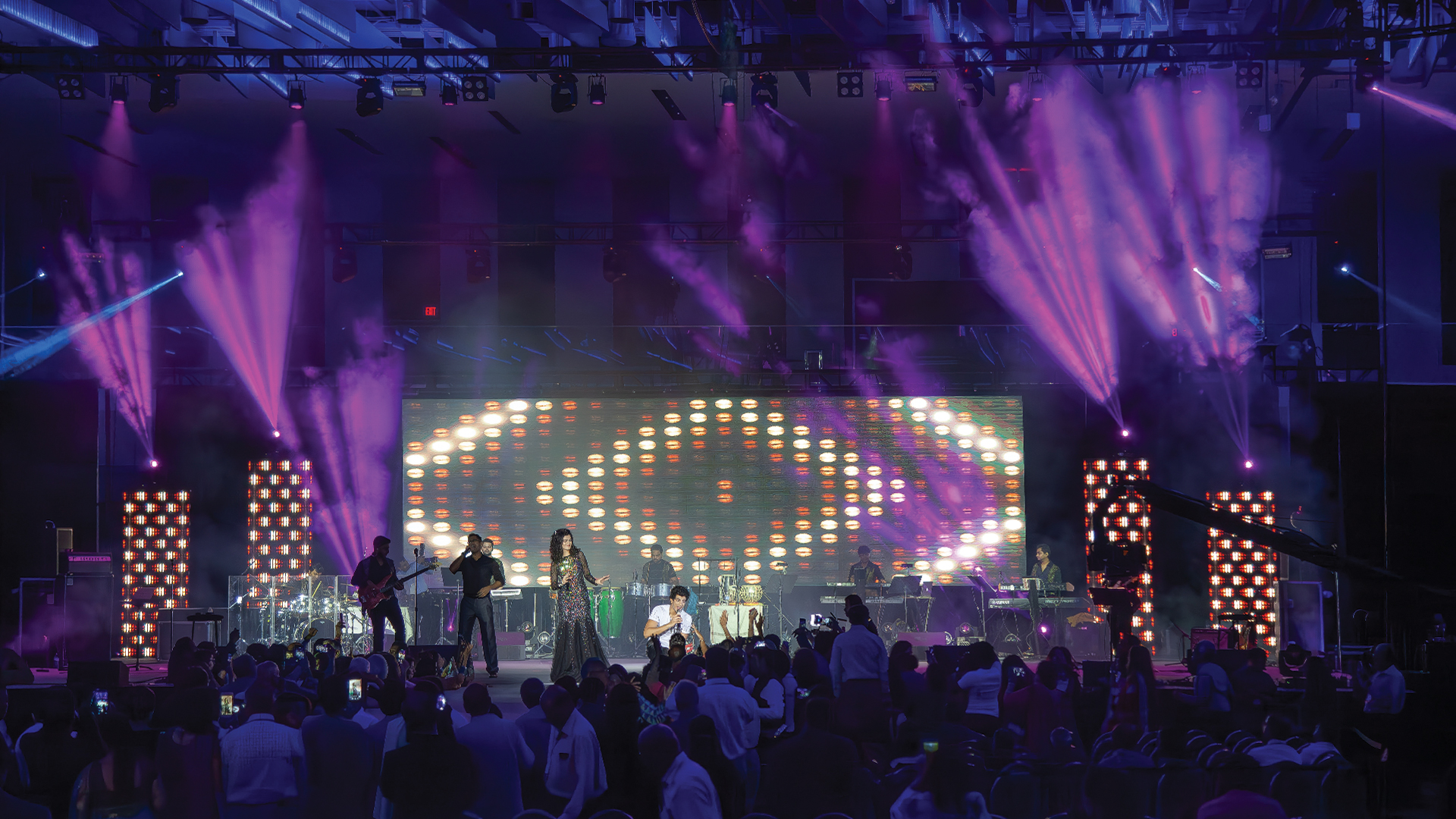
The global LED wall industry crossed $10 billion in annual revenue during the early 2020s and has shown no signs of deceleration. From purpose-built arenas in North America to temporary outdoor stages in Australia, from high-design corporate environments in Singapore to heritage festival sites in Europe, LED video wall technology has been adopted with regional variations that reflect different market structures, venue architectures, cultural production traditions, and regulatory environments. Understanding these regional differences illuminates both the universality and the local specificity of professional LED wall deployment
North America: The Scale Market
North America remains the world’s single largest market for large-scale touring LED infrastructure. The density of major touring productions — concentrated around the output of the major label system, the comedy touring circuit, and the sports entertainment complex — creates a rental demand that sustains the world’s largest concentrations of touring-grade LED inventory. Companies like PRG (Production Resource Group), headquartered in New Windsor, New York, and VER (Video, Events, and Rigging) maintain LED inventories representing hundreds of millions in asset value, serving hundreds of concurrent productions across any given week of the touring season.
The North American market has particularly driven demand for high-brightness outdoor LED panels — the 5,000–8,000 nit range products capable of competing with direct sunlight at stadium shows and outdoor festivals. ROE Visual Carbon, Absen Acclaim Pro, and Unilumin USlim outdoor series products have found their heaviest adoption in North American touring, where the scale of outdoor venues — from Coachella’s Empire Polo Club to Toronto’s Budweiser Stage — demands maximum brightness performance. The clear span tent structure technology that characterises many North American outdoor venues also demands weatherproof LED solutions capable of surviving the full range of North American climate conditions.
Europe: The Heritage Challenge
European LED wall deployment faces a distinctive challenge not present at the same scale in other markets: the integration of modern production infrastructure with protected historic venues. A major European tour might include dates at a 19th-century opera house in Vienna, a medieval castle courtyard in the south of France, and a contemporary arena in Amsterdam — each presenting radically different structural, regulatory, and aesthetic constraints for LED installation
European festival culture) — arguably the most developed in the world, anchored by events like Glastonbury Festival), Roskilde), Rock am Ring), and Primavera Sound — has developed sophisticated approaches to temporary LED infrastructure deployment that balances production ambition with site protection requirements. Stageco), the Belgian structural engineering and staging company, has been central to many of these solutions, developing staging systems that distribute structural loads to protect historic or ecologically sensitive ground surfaces while supporting the LED wall loads required by major productions.
Asia: The Growth Frontier
Asia represents the fastest-growing regional market for professional LED production technology), driven by the expansion of South Korean and Japanese pop entertainment (collectively known as K-pop and J-pop) into global touring markets, the rapid development of premium concert infrastructure in Chinese tier-1 and tier-2 cities, and the emergence of destination entertainment districts across Southeast Asia. Samsung) and LG’s LED divisions), both headquartered in South Korea, have used their home market dominance as a platform for global professional market penetration — with Samsung’s The Wall for Business) and LG’s MAGNIT MicroLED) products finding growing adoption in Asian permanent installation markets.
The K-pop concert production industry) specifically has driven innovation in LED stage design vocabulary). Productions for acts like BTS, BLACKPINK, and TWICE have deployed full-stage LED floors), 3D curved LED surfaces), and audience-interactive LED wristband systems) in combination with main LED walls) — creating total visual environments that have influenced production design globally. The technical demands of these productions have accelerated the development of flexible LED tile systems) and high-speed wireless LED control protocols) that have subsequently entered Western touring markets.
Australia: Logistics as Production Design
Australian live event production operates under logistical constraints that shape production design decisions in ways that are largely invisible to audiences. The cost and complexity of international freight) to and from Australia — particularly for large, heavy items like LED wall systems — has historically made Australian touring economics unfavourable for productions that assumed North American or European freight economics. The result is a sophisticated local rental inventory ecosystem) anchored by companies including Novatech), SXS Events), and Staging Connections) that maintain substantial LED wall inventory) within Australia, reducing international freight requirements for international touring productions that would otherwise be prohibitively expensive.
Australian outdoor festival production — led by events like Splendour in the Grass), Laneway Festival), and the Sydney Festival) — has developed particular expertise in temporary outdoor LED installations) that survive Australian climate extremes: intense UV radiation, dust, humidity, and the thermal cycling of summer festival conditions. IP65-rated) and IP67-rated outdoor LED panels) from manufacturers including Absen) and Unilumin) dominate Australian outdoor festival production for their combination of weather resistance and brightness performance.
The Global Supply Chain: Manufacturing and Procurement
Behind every regional LED wall deployment lies a manufacturing supply chain overwhelmingly concentrated in southern China, specifically in the Pearl River Delta region anchored by Shenzhen. The concentration of LED panel manufacturing) in this geography — estimated to account for 70%+ of global professional LED panel production — creates both cost advantages and supply chain vulnerabilities that procurement managers at major rental houses monitor carefully. The disruptions of 2020–2022 demonstrated the risks of single-region dependency; leading rental companies have diversified supplier relationships across multiple manufacturers to maintain inventory availability through periods of production constraint.
For AV production professionals operating globally, fluency with the regional variations in market structure, venue architecture, and logistical constraints is as important as technical knowledge of the systems themselves. The global LED wall market) rewards those who understand it in its full geographic complexity.
