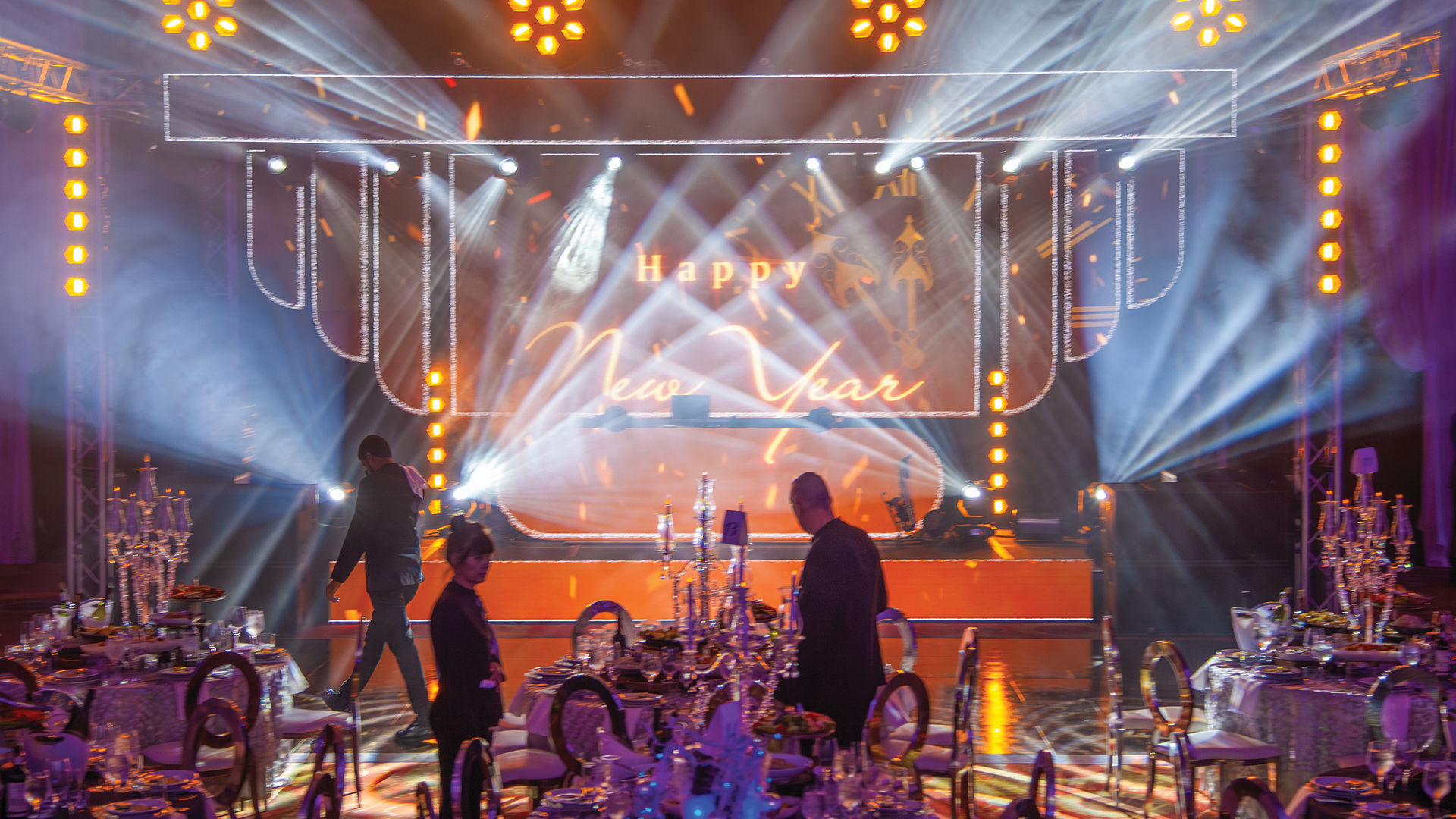
The LED video wall revolution transformed stage design from static backdrops to dynamic visual environments. But when millions of pixels decide to display something other than your carefully crafted content, the results can range from abstract art to what can only be described as glimpses into parallel universes. These are the stories of LED displays that developed their own visual vocabularies.
The Absen Wall That Remembered Everything
The 2019 corporate event at a Las Vegas convention center featured a massive Absen PL2.5 installation—180 panels configured in a curved array that served as the primary presentation surface. Video engineer Marcus Webb had programmed weeks of content, but the wall had other plans.
“During the CEO keynote, fragments of content from rehearsal started appearing,” Webb recalls. “Not full images—just ghost layers that seemed to float beneath the live feed. We were running Resolume Arena for playback, and I can tell you the source was clean. The wall was somehow retaining and displaying echo images from content we’d tested two days earlier.”
Investigating the Digital Memory
The phenomenon, which Webb documented extensively, appeared related to the receiving card firmware on specific panels. “We eventually isolated it to a batch of cards that had been updated with beta firmware for a previous show. The Novastar MCTRL4K processor was outputting correctly—we verified with a Decimator MD-HX inline. The ghosts were being generated at the panel level, like digital memories refusing to be overwritten.”
ROE Visual and the Spontaneous Color Shift
The ROE Visual Carbon CB5 panels earned their place in touring production through exceptional color reproduction and rugged construction. But LED engineer Samantha Torres encountered a CB5 configuration on a 2021 stadium tour that seemed to have aesthetic opinions.
“We calibrated the wall using Brompton Tessera SX40 processors—industry standard, absolutely reliable. The color calibration profiles were perfect during soundcheck. But during the show, one section of the wall started shifting magenta. Not dramatically—maybe 3% on the vectorscope—but visible against the adjacent panels. The section would drift magenta over about 20 minutes, then snap back to calibration when we weren’t looking.”
The Temperature Theory
Investigation revealed a thermal pattern. “The magenta drift correlated with panel temperature in those specific tiles,” Torres explains. “They ran about 3°C warmer than adjacent panels—probably a batch variation in the LED binning. The color temperature compensation in the Tessera was working, but it couldn’t keep up with the rate of thermal change. We solved it with improved ventilation and a custom thermal calibration curve programmed specifically for those panels.”
The Pixel Mapping Rebellion of 2020
When pixel mapping goes wrong, it creates visual experiences that no designer intended. Video programmer Derek Huang encountered a particularly memorable malfunction during a live broadcast event featuring a Unilumin UpadIII H3 wall.
“We had mapped the wall precisely in disguise d3—every panel accounted for, every pixel addressed correctly. The fixture library was current, the Art-Net universes were clean. But during the opening sequence, the wall decided to interpret our content through what I can only describe as a kaleidoscope filter that didn’t exist in our programming.”
The visual effect was actually striking—geometric patterns that seemed to fold space across the display surface. “Half the audience probably thought it was intentional. The other half included the client, who definitely knew it wasn’t. We traced the issue to a universe crossover that happened when someone on the lighting network accidentally broadcast conflicting sACN data on overlapping channels.”
Historical Context: The Evolution of LED Display Technology
The journey from early LED displays to modern fine-pitch video walls spans four decades of innovation. The first practical LED video displays appeared in the 1980s, pioneered by companies like Daktronics for stadium scoreboards. These early systems used discrete LEDs with pixel pitches measured in inches rather than millimeters.
The 1990s brought surface-mount LED technology that enabled smaller pixel pitches and the first touring-friendly panels. Barco and Element Labs (later acquired by Barco) developed modular systems that could be assembled and disassembled for touring. The Stealth panels from Element Labs became the first widely adopted touring LED product, though their quirks were legendary.
The Blackmagic Processing Puzzle
Not all alternate dimension displays originate in the LED panels themselves. Video engineer Christina Park discovered this during a 2022 installation featuring INFiLED WP Series panels and a complex signal chain.
“We had Blackmagic Design ATEM Constellation 8K handling our switching, feeding into a Colorlight X16 processor. The wall started displaying what looked like content from a completely different show—a concert that had used the same rental gear three weeks earlier. We eventually traced it to a frame buffer issue in one of the DeckLink cards that hadn’t been properly cleared.”
The Importance of Signal Chain Hygiene
Park’s experience highlights the importance of complete signal chain verification before every show. “We now run a test pattern sequence through every piece of processing gear before loading show content. The SMPTE color bars and grid patterns flush out any latent images lurking in the buffers. It adds 15 minutes to setup but prevents dimensional bleed-through.”
Virtual Production and the Reality Confusion
The rise of virtual production using LED volumes has created new categories of visual anomalies. When LED walls are meant to create photorealistic environments for camera capture, any deviation from expected behavior creates jarring discontinuities.
LED technician Robert Chang worked on a virtual production stage using Sony Crystal LED panels driven by Unreal Engine through Disguise gx series servers. “The tracking system lost sync for about 200 milliseconds during a key shot. The LED wall continued displaying the last known camera position while the physical camera moved. For those 200 milliseconds, the actor was standing in two realities simultaneously—the one the camera saw and the one the wall thought it should display.”
Practical Diagnostic Approaches
When LED walls start displaying unexpected content, systematic diagnosis prevents panic-driven troubleshooting. The first step is always isolating the source—is the anomaly in the content, the processing, the transmission, or the display?
A signal analyzer like the Phabrix Qx can verify signal integrity at various points in the chain. If the signal is clean at the source and corrupt at the display, the problem lies in transmission or processing. If the signal is corrupt from the source, look upstream at content servers or switchers.
Temperature monitoring across the LED surface can reveal thermal-related color shifts. FLIR thermal cameras have become standard diagnostic tools for large LED installations, identifying hot spots that correlate with color anomalies.
Firmware and Protocol Verification
Maintaining consistent firmware versions across receiving cards prevents behavior variations between panels. Mixed firmware deployments are a common source of visual inconsistencies that can appear to be content issues.
Protocol verification tools that analyze HDMI, SDI, and DisplayPort connections can identify EDID conflicts that cause resolution mismatches manifesting as visual artifacts. The Murideo Fresco Six-G serves this purpose admirably, forcing consistent handshake behavior across the signal chain.
LED walls are windows into visual possibilities—sometimes intentional, sometimes not. The professionals who master these displays learn to read their moods, anticipate their quirks, and occasionally appreciate their unauthorized artistic contributions. Every glitch survived is knowledge gained, every alternate dimension glimpsed is a story for the post-show debrief.
