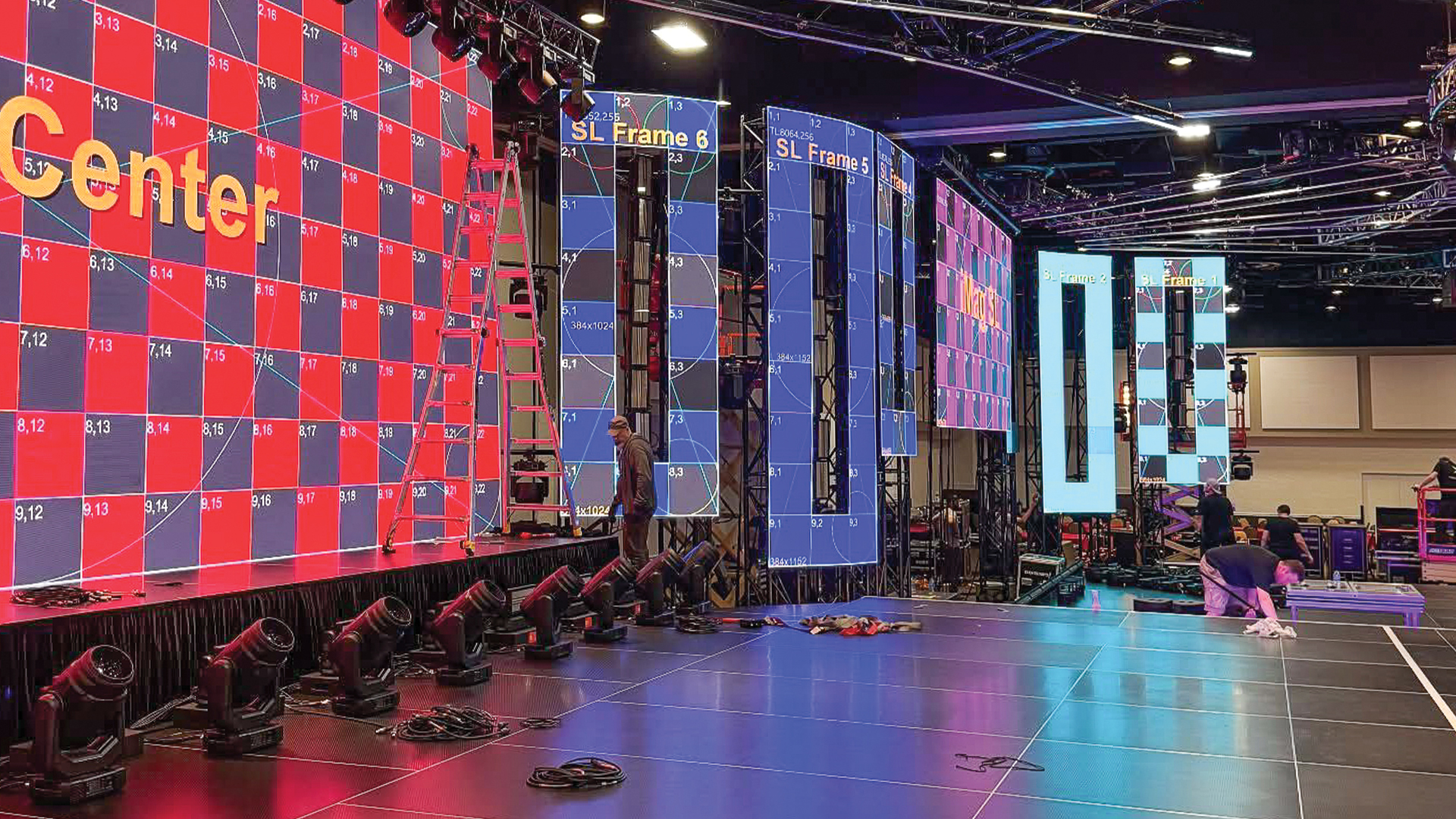
The LED wall appeared to hover in space no visible supports, no frames, nothing connecting it to the floor or ceiling. Audiences marveled at the impossible effect, unaware that carefully engineered flying hardware and matte black rigging created the illusion. This floating LED wall effect has become increasingly popular for premium events, product launches, and theatrical productions where visual magic matters more than visible infrastructure.
Engineering the Illusion
Flying LED systems suspend displays from overhead rigging using steel cables, chain motors, and specialized mounting hardware. The challenge lies not in suspending the weight—structural engineering handles that straightforwardly—but in making support invisible. Black steel cables virtually disappear against dark backgrounds; chain motors from CM Lodestar position displays precisely; custom mounting frames distribute load while maintaining minimal visual footprint.
Background control proves equally important to the illusion. A floating LED wall against a white backdrop looks suspended rather than floating the support hardware becomes visible regardless of color. Dark backgrounds, theatrical blacks from Rose Brand or Gerriets, and controlled lighting that avoids illuminating rigging all contribute to successful floating effects. The illusion works only when every element cooperates.
Lighting Considerations
Lighting design must avoid revealing what staging hides. Front light on LED walls can illuminate rigging above them; side light can catch support cables. Designers creating floating effects carefully control light angles, using barn doors, flags, and careful aim to illuminate displays without spilling onto supporting infrastructure. Moving heads from Martin, Robe, and Claypaky with precise shuttering capability enable lighting that respects illusion boundaries.
Edge lighting can enhance floating effects by emphasizing display boundaries. Subtle LED tape along display edges creates a glow that separates screen from background, reinforcing the sense of an object suspended in space. This technique requires careful color and intensity matching to avoid appearing gimmicky—subtle enhancement serves the illusion better than obvious effect.
Practical Implementation
Venue rigging capacity determines floating display feasibility. Flying an LED wall requires overhead structure capable of supporting concentrated loads display weight plus mounting hardware plus safety factors. Many convention centers provide adequate capacity; other venues require ground-supported truss structures that create overhead positions where building structure cannot. Structural engineers verify capacity and specify appropriate rigging approaches for specific installations.
Cable management for floating displays requires particular attention. Power and data cables running to suspended displays must be routed invisibly typically following support cables and disappearing into background darkness above the display. Wireless video transmission from Teradek or Hollyland can eliminate video cables entirely; wireless DMX handles control signals. Power remains the challenge batteries for LED walls at scale aren’t practical, requiring physical power cables that creative routing must hide.
Floating LED wall effects combine structural engineering, lighting design, and careful production coordination. The apparent magic results from deliberate effort across multiple disciplines. Productions achieving convincing floating effects create memorable visual moments that distinguish their events the kind of experience audiences photograph, share, and remember.
