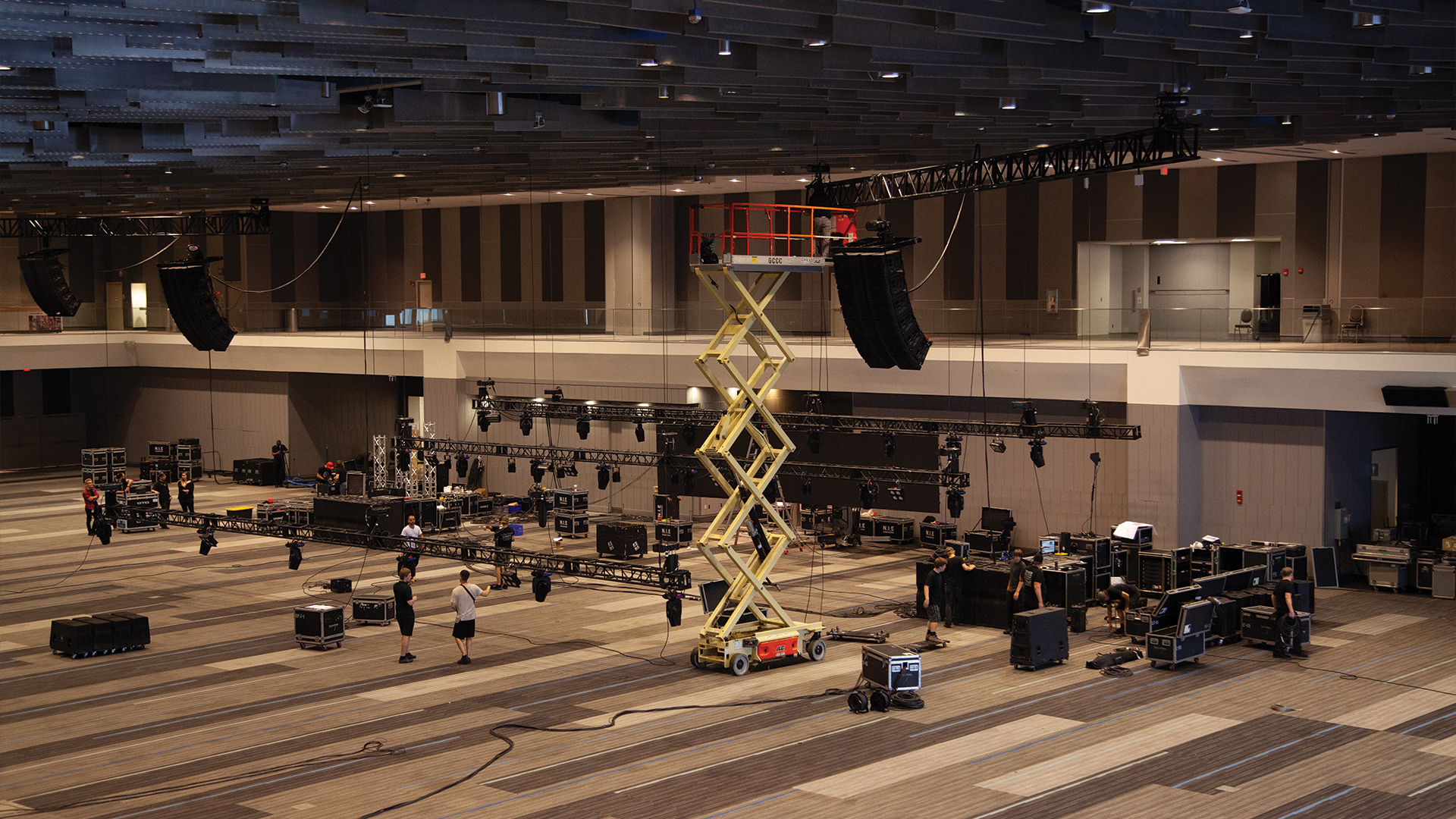
The executive rehearsed backstage, visibly nervous despite years of public speaking experience. The production manager noticed and made a small adjustment: she turned on the confidence monitor showing the current slide, positioned a clock displaying remaining time, and ensured the confidence wedge audio let the speaker hear the room clearly. These AV support elements didn’t change the presentation content, but they transformed the presenter’s demeanor. Understanding how AV gear enhances presenter confidence enables production teams to support speakers who deliver their best performances.
Confidence Monitors and Presenter Support
Confidence monitors display presentation content visible to speakers but hidden from audiences. Positioned at stage front or embedded in presenter tables, these displays show current slides, next slides, speaker notes, and timing information. Presenters who can see their content without turning toward screens behind them maintain eye contact with audiences, appear more natural, and feel more in control. Products from Barco, Samsung, and professional AV integrators provide confidence monitoring solutions for various stage configurations.
Teleprompter systems from Autocue and Prompter People enable presenters to deliver scripted content while appearing to speak naturally to audiences. The beam-splitter glass that reflects scrolling text while remaining transparent to cameras creates the illusion of extemporaneous delivery. For executives who must deliver precisely worded messages—legal disclaimers, financial guidance, policy announcements—teleprompters provide the accuracy scripted delivery requires without the disconnection of reading from papers.
Audio Support for Presenters
Stage monitor systems let presenters hear themselves and other audio elements clearly. A speaker who can’t hear their own voice tends to speak louder, creating strained delivery and potential feedback issues. In-ear monitors from Shure PSM and Sennheiser provide private audio without stage wedges that might create feedback. Custom-molded in-ears from Ultimate Ears or 64 Audio provide superior comfort and isolation for executives who present frequently.
Intercom connections enable production teams to communicate with presenters during performance. A calm voice providing timing cues—”two minutes remaining”—helps speakers pace without visible clock-checking. Direction like “slow down” or “you’re doing great” provides real-time support that improves delivery. Clear-Com and RTS systems integrate presenter communication into broader production communication infrastructure.
Environmental Comfort Elements
Lighting quality affects presenter comfort significantly. Harsh front light that causes squinting creates visible discomfort; properly designed key lighting with appropriate color temperature and intensity creates comfortable visibility. Light positioned to avoid direct eye contact—angled from above rather than straight ahead—reduces the visual strain that makes extended presentations fatiguing. Lighting designers who understand presenter comfort create environments that support rather than challenge speakers.
Climate control on stage areas prevents the visible sweating that undermines presenter confidence. Stage lighting generates heat; nervous presenters generate more. Ensuring adequate air conditioning, positioning air movement to reach presenter positions, and testing conditions during rehearsal prevents the thermal discomfort that audiences interpret as anxiety regardless of its actual cause. These comfort elements might seem peripheral to AV, but they significantly affect the presenter experiences that AV systems exist to support.
AV systems that support presenter confidence represent investments in event success. Speakers who feel supported, informed, and comfortable deliver better presentations than those fighting technical uncertainty. Production teams that prioritize presenter experience—through appropriate monitoring, audio support, and environmental comfort—enable the performances that make events memorable.
