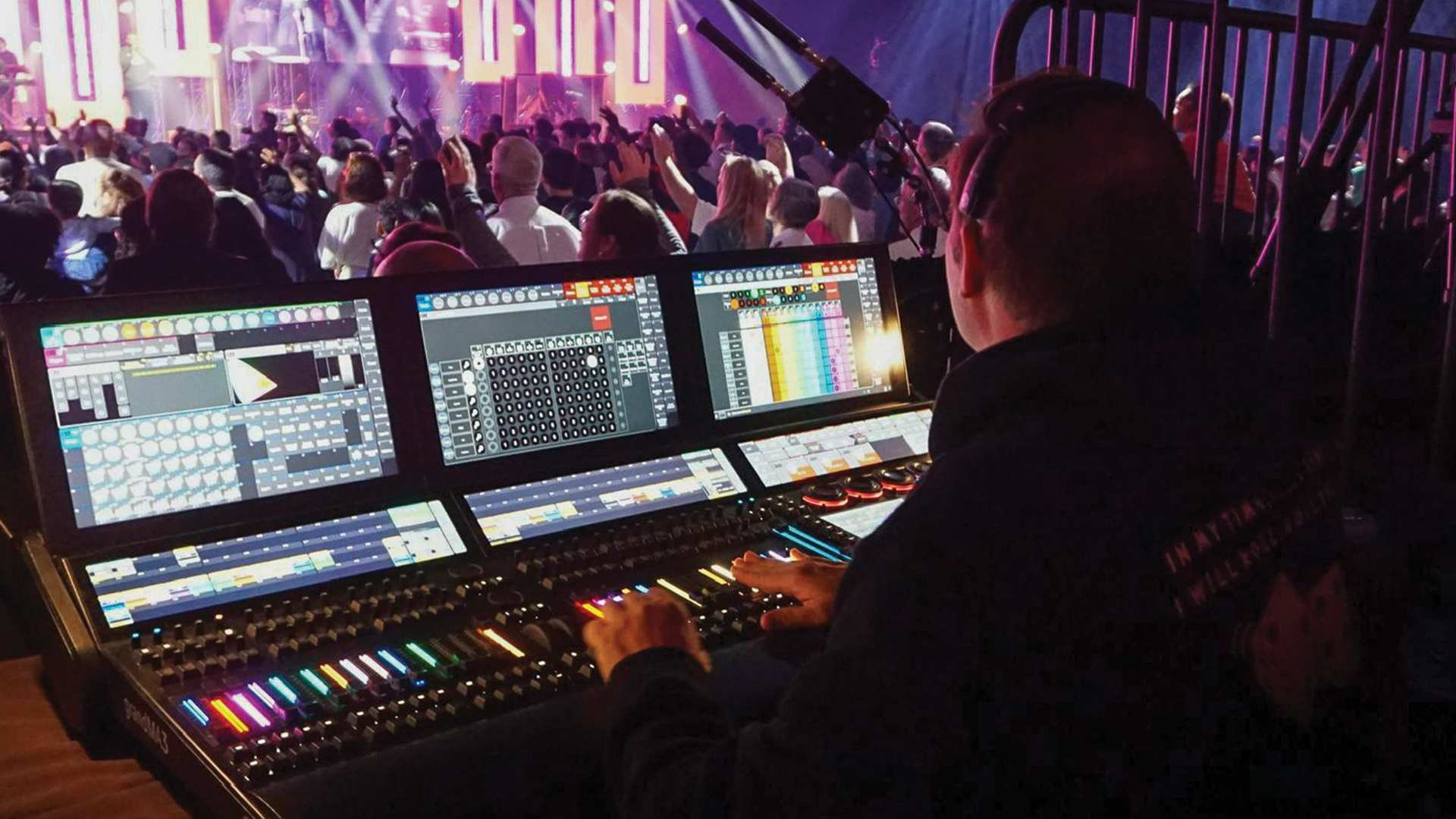
A show file built for a 1,000-date concert series is an extraordinary technical document. It accumulates the creative decisions of the lighting designer, the programming precision of the LD operator, the operational refinements of nightly performance, and the show-file housekeeping required to keep a complex grandMA3 programming) structure coherent across months and multiple operators. Understanding the techniques that make large-scale concert series lighting) productions function reliably and creatively over thousands of performances illuminates some of the most sophisticated practices in the live entertainment industry.
Show File Architecture: Building to Scale
A grandMA3 show file for a multi-night concert series is not built the same way as a one-off event file. It requires an architectural approach that anticipates operator changes), venue variations), equipment substitutions), and creative evolution) over the life of the production. The show file architecture decisions made at the beginning of a tour shape how flexible and maintainable the file remains 500 performances in.
Grouping strategies) in grandMA3 — the way fixtures are organised into Groups for programming access — become critical at scale. A thoughtfully designed group structure allows a substitute operator, unfamiliar with the specific show, to understand the fixture architecture of the production intuitively. Group naming conventions) that identify fixture type, position, and zone — for example ‘FH_WASH_L_1-8’ for front-of-house wash fixtures on the left cluster — enable rapid orientation. The alternative — cryptically numbered groups organised by the quirks of an individual programmer’s mental model — creates operational fragility that expresses itself as errors and confusion when personnel change.
The Phaser Engine: Speed and Flexibility at Scale
grandMA3’s Phaser Engine) represents the most powerful tool available for generating dynamic lighting behaviour across large fixture counts without storing thousands of individual cues. A Phaser) in grandMA3 terms is a mathematical function that modulates one or more fixture attributes over time — creating movement, colour cycling, intensity chasing, or any combination thereof. The elegance of the Phaser approach is its parametric nature: a single phaser definition applied across a 300-fixture rig can be modified in real time by adjusting speed, size, phase spread, or attribute range — generating completely different visual results without touching individual cue data.
For a 1,000-show concert series, this flexibility is commercially significant. Tour creative direction) often evolves between legs — new songs are added, set lists change, the overall visual vocabulary of the production is refined based on what works in front of live audiences. A show file built heavily on phaser-based programming can accommodate these creative changes with relatively modest reprogramming effort, whereas a file built on dense stacks of static cue data requires far more extensive editing to achieve the same updates. The grandMA3 Programmer) — the live input layer where phaser editing happens before being stored — enables experienced LD operators to generate and refine looks in real time during show-day rehearsals with speed that impresses creative directors.
Preshow and Changeover: The Hidden Programming
A concert series lighting production is not simply the show itself. It encompasses pre-show atmospherics) as the audience enters, support act lighting) (often running on a separate page of the same grandMA3 show file with reduced fixture access for support act operators), changeover looks) between acts that maintain audience energy while the headline production loads the stage, and post-show atmospherics) for safe crowd egress. Each of these phases requires dedicated programming that is subordinate to the main show but must be maintained and updated across 1,000+ performances with the same discipline as the headline content.
Support act lighting on major tours is frequently managed through a grandMA3 sub-session) or a restricted Fixture Profile Group) that gives support act operators access to a subset of the production rig — typically front-of-house washes, follow spot resources, and a configured subset of the floor and set lighting — while locking headline production fixtures away from inadvertent modification. This architecture requires careful design in the User Profile Management) section of grandMA3, but pays dividends in protecting headline production programming integrity across the full run.
Multi-Day Festivals vs. Single-Night Arena Shows: Programming Adaptation
A show file designed for a multi-day festival appearance requires fundamentally different optimisation than an arena concert series file. Festival programmers work against the constraint of shared infrastructure) — fixtures they may have partial control of, house lighting systems) that may or may not be integrable, and variable advance information) about the specific venue’s capabilities. The grandMA3 Patch and Fixture Library) management becomes critical: a festival show file that can rapidly adapt to fixtures of different types in equivalent positions — using Multi-Patch) and 3D Fixture Cloning) — without losing the programmatic logic of the show is significantly more operationally robust than one that assumes specific fixture types in specific positions.
The grandMA3 PreVis environment) and its integration with WYSIWYG) and Capture Visualizer) has transformed festival programming preparation. Rather than discovering at loadout that the festival rig doesn’t support a specific programming approach, an experienced programmer can model the available festival fixtures in a visualiser, import the production’s show file, and identify incompatibilities weeks in advance. The adjustments required to adapt the production to the festival rig are made in a virtual environment, with confidence that the real-world deployment will match the preparation.
Archiving and Documentation: The Long Game
A show file that has evolved through 500 performances carries enormous embedded value — months of creative decision-making, operational refinement, and hard-won optimisation. Show file archiving practices) for major concert series productions have evolved into a discipline in their own right: date-stamped backups before every significant modification, revision notes) documenting what changed and why, and offline copies) stored independently of the touring console hardware. Productions that lose show file data to console hardware failure without adequate backup infrastructure face the loss of months of programming work — a professional catastrophe that proper archiving practices prevent entirely.
For the 1,000-show productions that define the upper tier of concert touring, these disciplines collectively represent the infrastructure of excellence: not dramatic, not glamorous, but absolutely indispensable.
